Most teams are not trying to be careless. They are trying to get work done. AI makes them faster, and that speed comes with a tradeoff most companies have not yet addressed: the AI sees everything you send.
Client names. Internal project codes. Email addresses. IBAN numbers. Contract details. It all goes through. Mono's Anonymisation feature changes that.
How does it work?
You define the terms you want to keep private. A client name, a supplier's IBAN, an internal project codename, an email address, anything that should not leave your organisation. Email addresses and IBAN numbers are detected automatically, so you do not need to add those manually.
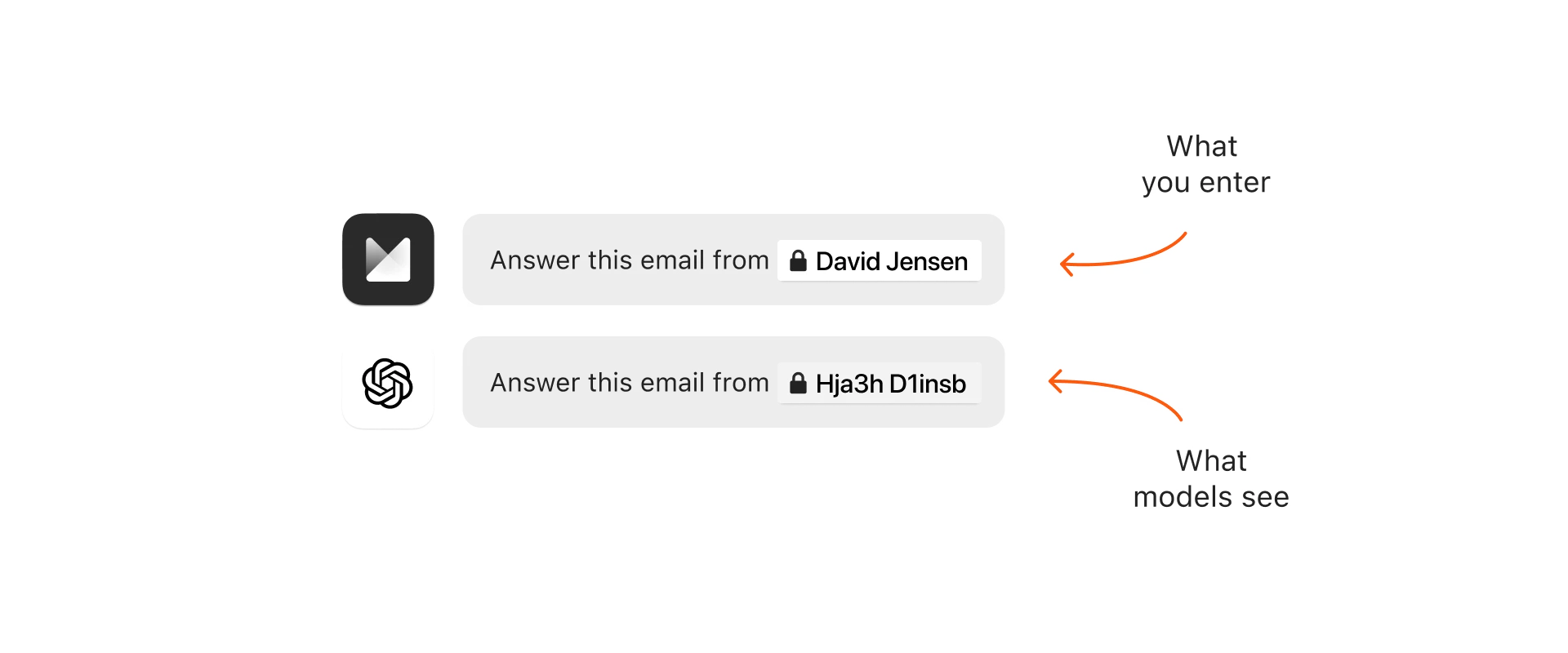
Once your terms are set, Mono replaces them silently before your prompt is sent to any AI model, whether that is Claude, GPT, Gemini, Perplexity, Mistral, DeepSeek, Moonshot, Z AI, or Grok. The model works with placeholder text. It never sees the real values.
You, on the other hand, still see the original terms in your chat. The experience feels completely normal. The protection happens in the background, invisibly.
Why is it important?
Privacy regulations are tightening. GDPR fines are not hypothetical anymore. And handling business data with care is just the right thing to do.
Anonymisation introduces an additional layer of protection.
There is no complicated setup. No IT project. No new workflow to adopt. You add your terms once, and Mono handles the rest. That is the kind of privacy layer that gets used, because it does not get in the way of your workflow.
Who is it for?
This feature is most valuable for teams working regularly with client data, financial information, internal project names, legal documents, or anything that carries compliance risk.
Be aware that you still expose the information to Mono. Mono does save your data encrypted, but in order to encrypt the terms, the terms need to be saved in Mono's database.